2026 · Three.js · WebGL · NASA NEO
Asteroid Tracker
A week of near-Earth traffic, rendered in real time. Built like mission control. Runs in your browser.
Raw NEO feeds are dense tables.
This is what they should feel like.
Feature · Rendering
Earth, lit by an actual sun.
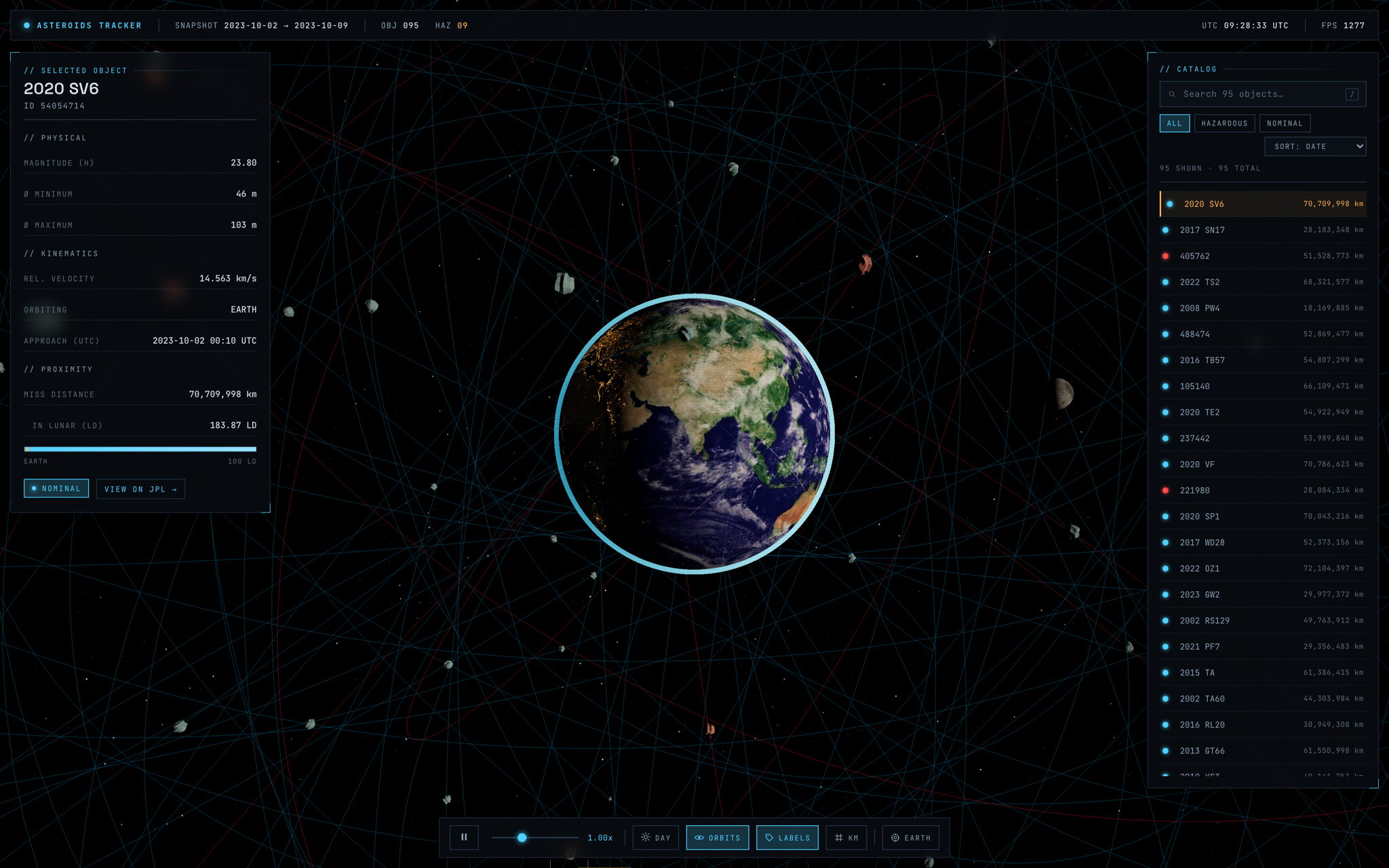
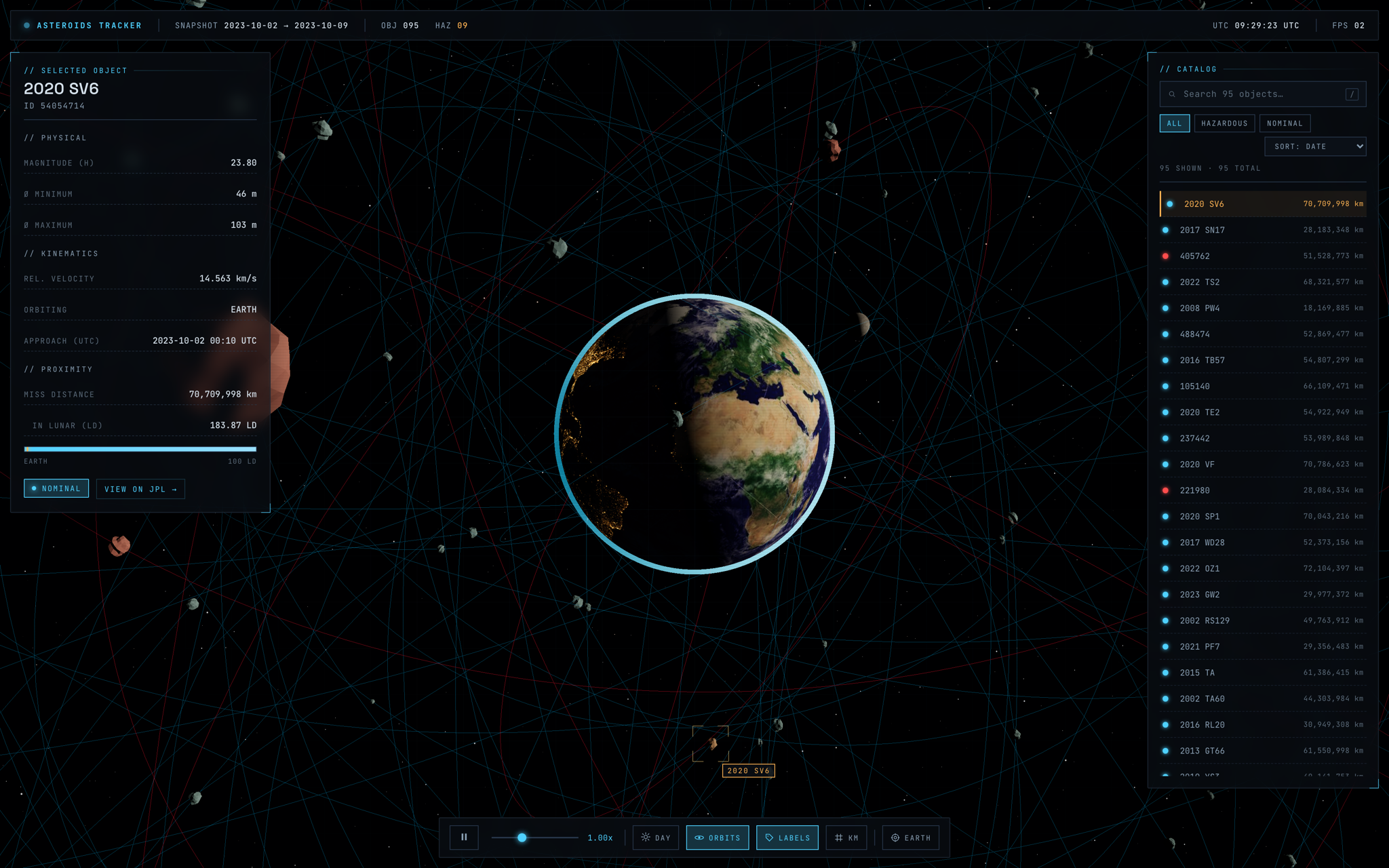
The planet is a physically-based sphere with day and night textures that blend based on the true sun angle in the scene, not a gradient, not a shader trick.
A Fresnel atmosphere shader catches the rim, ACES tone mapping keeps highlights clean, and an UnrealBloomPass lights the horizon the way you'd expect it to.
Telemetry
Every number you'd ask for, where you'd expect it.
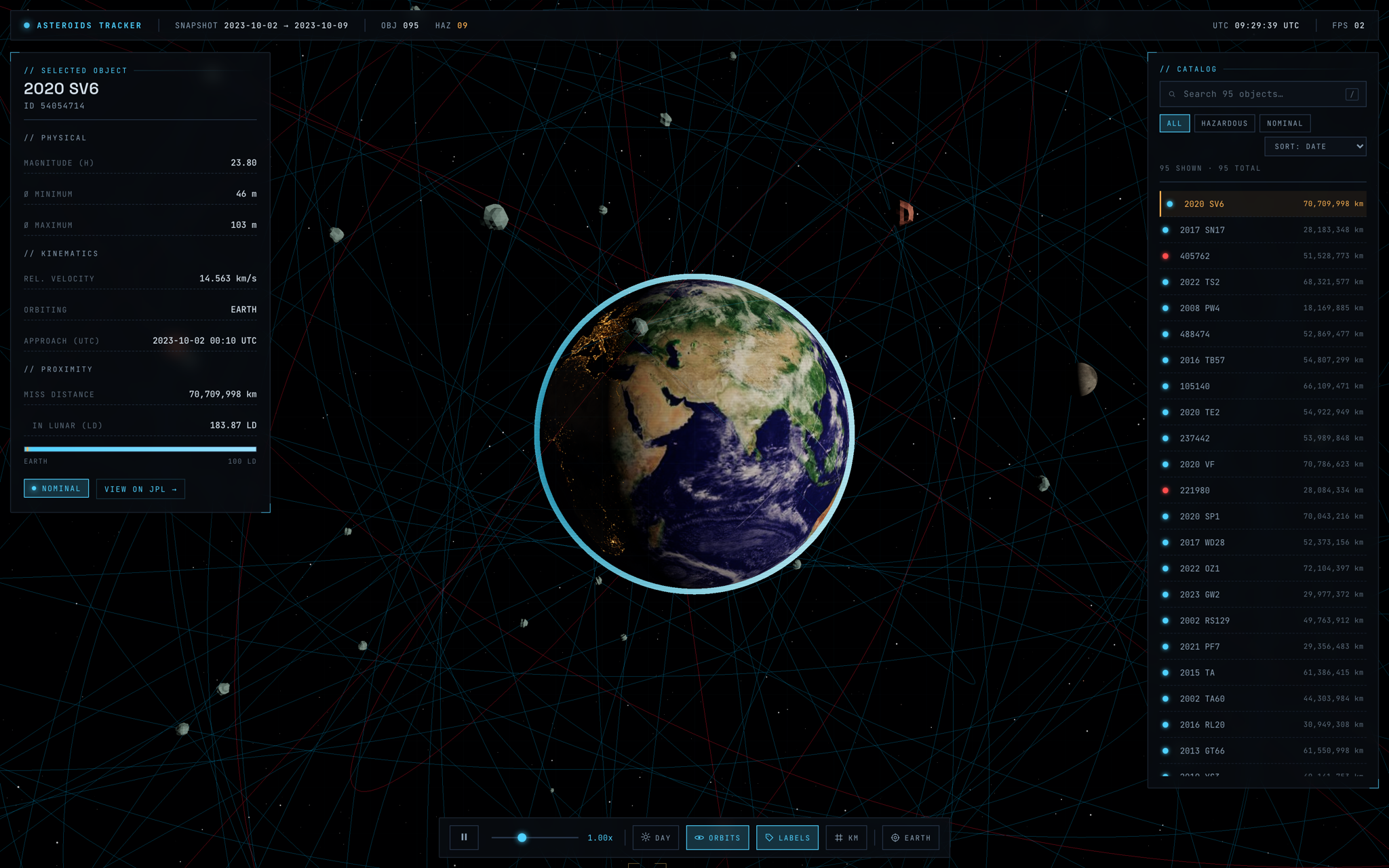
Magnitude, estimated diameter, relative velocity, approach time, miss distance, rendered as a live panel on the left. A lunar-distance bar visualises proximity in LD, and a JPL link drops you straight into the source record.
Mobile
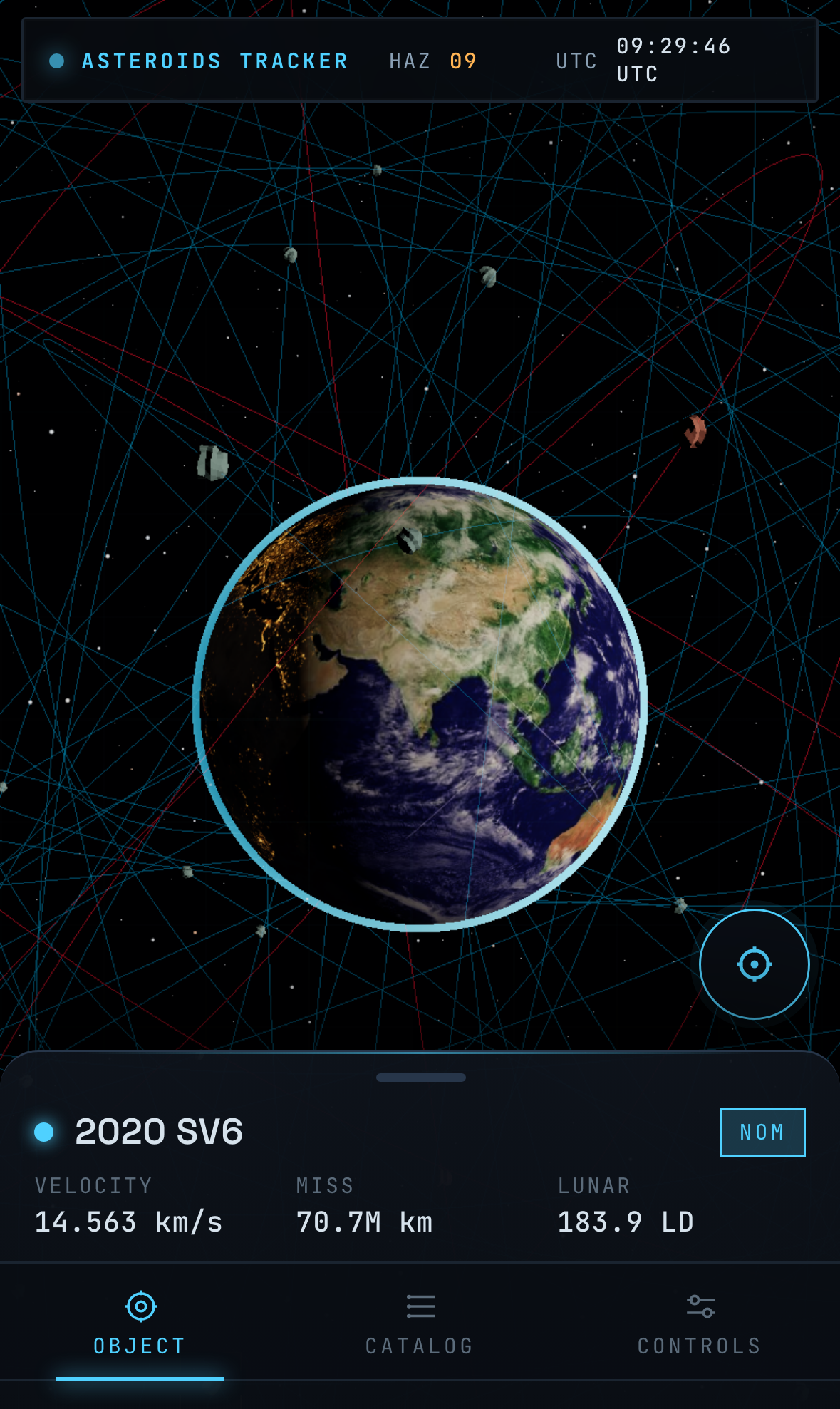
Three desktop panels reparent into a bottom-sheet.
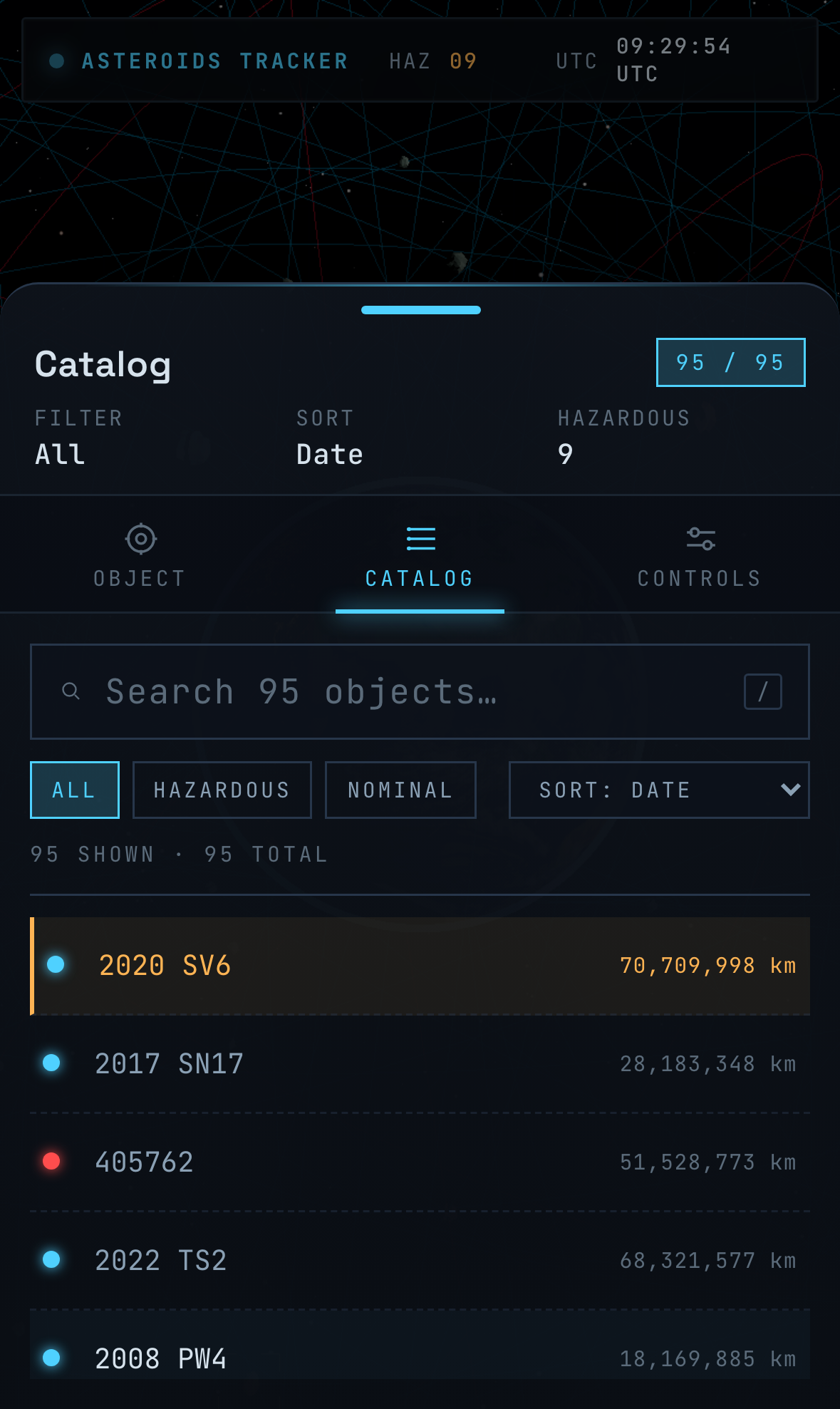
Catalog
95 objects. Fuzzy search. Keyboard first.
Built for power users
Nine shortcuts. Zero menu hunting.
95 asteroids, one draw call. Every orbit deterministic from real NASA data. Every frame at 60 FPS with bloom on a single InstancedMesh.Fly it for yourself.
No sign-up, no API keys. The whole thing is static. A single bundle served from a CDN, running Three.js in your browser.